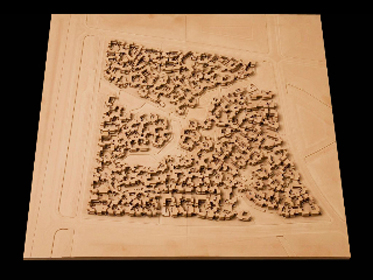
-From 2015-16- The Landscape Urbanism will be a MArch (16 months) /MSc (12 months) studio-based programme designed for students with prior academic and professional qualifications. It comprises a design studio, interrelated workshops and a series of lectures and seminars that form the core of project development.
AA LANDSCAPE URBANISM STUDIO WORK 2011-12: RE-ACTIVATED PRODUCTIVE URBANSCAPES
AA LANDSCAPE URBANISM STUDIO WORK 2011-12:
RE-ACTIVATED PRODUCTIVE URBANSCAPES
Shunyi Beijing China 2012
Students: Olga Mikhalelva, Ignacio Lopez
The aim of the project is to re-activate the region of SHUNYI and reboot current agrarian economy by creating system of different enterprises based on a combination of the airport infrastructure, new technologies in food production and existing agriculture know-how of SHUNYI.
The project use the food production process as a fuel for re-activation and a medium to
generate new urban environment.
The aim of the project is not to return to agrarian society or solve the global problem of the food production in the world, but to explore how local food production processes supported by new technologies can shape the city, capable to improve social, economic and environmental conditions in SHUNYI.
Explore the full project HERE
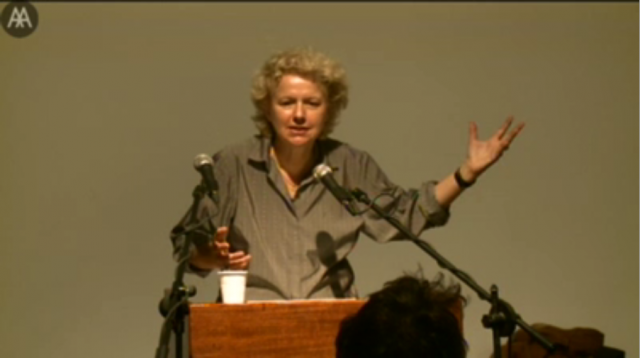
FRANCOIS FROMONOT AT THE ARCHITECTURAL ASSOCIATION LANDSCAPE URBANISM LECTURE SERIES 2012
Françoise Fromonot
Storks, Cabbages and Beakers: A Typology of Contemporary Urbanism
Date: 16/10/2012
Time: 18:00:00
Venue: Lecture
Hall
The third of four public talks in the Landscape Urbanism Lecture Series
Half a century has passed since the publication of Françoise
Choay's threefold typology of urbanism (progressist, culturalist, naturalist).
In light of the economical and ideological mutations of the post-1970s western
world, perhaps it is necessary to assess the contemporary panorama of
urban design. This lecture will propose a new classification of
urbanism and question how an updated classification might help construct an
alternative position for defining trends.
Françoise Fromonot, an architect by training, is currently Professor of
History, Theory and Design at the ENSA Paris and a lecturer at Sciences-Po
Paris. As a critic she is the author of numerous articles and several books on
contemporary architecture and urbanism. She is a co-founder and editor of the
French critical journal criticat.
Students please visit video archive to view this lecture. This lecture
is not available online.
AA LANDSCAPE URBANISM STUDIO WORK 2011-12: ACTIVE HERITAGE, Chanping Beijing China
AA LANDSCAPE URBANISM STUDIO WORK 2011-12:
ACTIVE HERITAGE
Chanping Beijing China
Students: Daniel Portilla, Xuan Ying, Tossapon Arunsuraponmatee
Changping is located around 40 km to the northwest from Beijing. On the way of one of the main entrance to the Great Wall, the district comprises an area of 1,430 km2 and a population over the 600,000 people. Within its territory are the thirteen Ming Dynasty Tombs, as well as the Spirits Way. Two heritage sites visited for million of tourists every year. The Ming Tombs were built from 1409 and 1644. This defines the character of the study area and determines the strategy of intervention. 1 The current city fabric of Changping is growing to the north direction reaching some nearly areas of the heritage sites, setting the question about if it is possible for urban development to happen into this protected areas.
Historical heritage was the reason for all this urban area to be developed. At the beginning as the sacred meaning of the tombs for the emperors, and nowadays as the prominent touristic attractions that comprises the thirteen Ming Dinasty tombs and the Spirits Way. The control proposed by the international institutions in order to protect this area is based on a restrictive (passive) approach that defines a boundary that cannot be touched and some areas of “controlled development”. This kind of approach has demonstrated to be non-practical and that not take into account the existing urban life of the place. The proposal seeks for an active protection of the area, defining the way that the site can work as a whole balanced system, without voids that allows developer’s hunger to put their
eyes on.
EXPLORE THE FULL PROJECT http://issuu.com/aalandscapeurbanism/docs/aa_landscape_urbanism_active_heritage_chanping-bei
AA LANDSCAPE URBANISM STUDIO WORK 2011-12: WEAVE, RETHINKING THE URBAN SURFACE
AA LANDSCAPE URBANISM STUDIO WORK 2011-12:
WEAVE, RETHINKING THE URBAN SURFACE
Mentougou, Beijing China
Students: David Witte and Du Chen
WEAVE sets as its framework China’s economic boom and migration from the countryside which is boosting a high-speed urbanism that produces new cities in the shortest imaginable time, changing the faces of older towns. This directional urbanization, propelled from the coastal zones into the countryside, has brought the smallest villages face to face with the phenomenon of globalization – and its foreign capital and generic architecture.
Our course brief was based on China’s ambition to build 400 new cities by the year 2020. And we were asked to engage opportunistically with the generation of ‘proto-strategies’ for new large-scale agglomerations as a means of critically addressing the phenomenon of mass-produced urban sprawl. Our test bed is the growing sprawl of Beijing as capital of an emerging global superpower.
Explore the full project HERE
Peter Trummer lectured at the Architectural Assocaition Landscape Urbanism Lecture Series
Peter
Trummer
Landscape
Urbanism Lecture Series
Date: 8/10/2012
Time: 18:00:00
Venue: Lecture Hall
Time: 18:00:00
Venue: Lecture Hall
Running
time: 1hr 38mins mins
This lecture will
address the materialist position as an urban design practice through recent
examples, international case studies and a manifesto.
Peter Trummer
is Professor for Urban Design and head of IOUD: the Institute of Urban
Design & Planning at the University of Innsbruck. Currently, he
is a visiting professor at SCI-Arc in Los Angeles and at the
University of Pennsylvania, Philadelphia.
This is the second
of a 4-part public lecture series organised by the AA Graduate School Landscape
Urbanism Programme
AA LANDSCAPE URBANISM STUDIO WORK 2011-12: PROTOTYPICAL URBANITIES: SOCIAL WATERSCAPES
AA LANDSCAPE URBANISM STUDIO WORK 2011-12
SOCIAL WATERSCAPES
FANSHANG, BEIJING CHINA
Students: Ana Abram, Costanza Madricardo, Jaime Traspaderne
The Social Waterscapes Project investigates the role of water infrastructures within the city as a medium to improve social life. In the context of Chinese rapid urbanisation, we explore the potential of water as an instrument of modernisation... Explore Complete Project HERE
AA LANDSCAPE URBANISM STUDIO WORK 2011-12: PROTOTYPICAL URBANITIES: PERFORMATIVE GROUND-WORKS
AA LANDSCAPE URBANISM STUDIO 2011-12
PERFORMATIVE GROUND-WORK
TONGZHOU, BEIJING CHINA
Students: Leah Moukarzel, Jason Chee Han, Qijin Hana
‘Performative Ground-Works’ project has been developed in Tongzhou district. It comes as a response to rapid de-industrialization processes that take place in major Chinese cities.
The project explores mechanisms of soil remediation treatments as ‘prototypical urbanities’ intertwined with socio-ecological and economical changes. The mechanisms required to perform the ground works demand a laborious process that engages with the local community. The formation of the landscape integrates treatments in a phased development, bridging between land-form and built form. The notion of connectivity acquires an important role in merging the new ground into a continuous network of programmes, activities and spaces. Explore the complete project HERE
Eelco Hoofman lectured at the Architectural Assocaition Landscape Urbanism Lecture Series
Eelco Hooftman
LAND / SCAPE /
ARCHITECTURE
Date: 1/10/2012
Time: 18:00:00
Venue: Lecture Hall
The first of four talks
in the Landscape Urbanism Lecture Series, organised by the AA Graduate School
Landscape Urbanism Programme. Open to all.
Landscape Architecture
interacts in a complex continuum between man and nature, town and country, land
and architecture. We no longer reconcile the duality of opposite forces but
orchestrate and choreograph a multitude of dynamic and hybrid interactions. How
to turn towards a new landscape architecture of sustainable optimism; a potent
mix of artificial intelligence and natural instinct?
Eelco Hooftman is a
founding partner with Bridget Baines of GROSS. MAX. Landscape Architects. He
integrates theory and practice of landscape architecture in an extensive output
of projects that combines a Dutch sense of experimentation with a British sense
of humor and a German sense of rigour. Hooftman has regularly visited as a
critic at the AA School and is the first landscape architect to be selected as
member of the Royal Society of the Arts in Scotland. In 2010, Building
Designrecognised GROSS. MAX. as Public Realm Architect of the Year. The
studio’s collaborators include Zaha Hadid, David Chipperfield, Amanda Levete
Architects, Piet Oudolf and artist Mark Dion. Current projects include
Tempelhof Freiheit, the transformation of the former Tempelhof Airport in
Berlin and a linear park for the Central Business District in Beijing.
The first of a 4-part
lecture series organised by the Open to all.