AA LANDSCAPE URBANISM OPEN WEEK 2013


AALU students presenting in the Open Week the projects and sites of the year ahead:
Shruti Dabir, Winnie He, Tom Van de Bospoort and Gabriela Pulido

CLARA OLORIZ AND DOUGLAS SPENCER LECTURING AT THE AA 6th FEB 2013


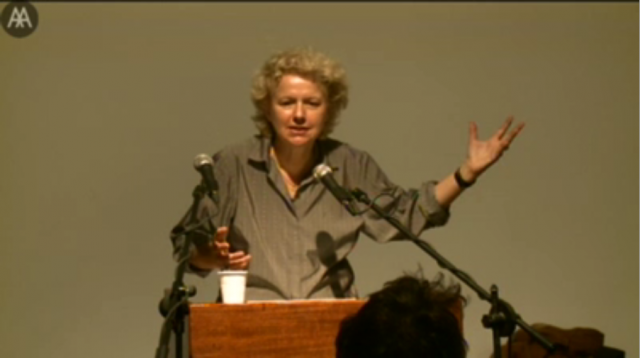
Clara Oloriz and Douglas Spencer (AA Landscape Urbanism) lecturing yesterday at the AA lecture hall on "Urban Prototypes: Mentalities and Perspectives". Part of the ongoing Research Cluster on Urban Prototypes:

http://urbanprototypes.aaschool.ac.uk/

RAHUL MEHROTRA IN CONVERSATION WITH AALU 07 FEB @ 3:00 PM, NEW SOFT ROOM AA

This Thursday 7th February Rahul Mehrotra will be in conversation with AA Landscape Urbanism Programme in the New Soft Room at the Architectural Association. Rahul Menhrotra is a prominent architect and urban planner who practices and teaches in Mumbai and Boston (Harvard GSD). He will discuss the AALU brief from this year based in India, specifically along the  Delhi Mumbai Industrial Corridor and the rise of private townships developments  and other rapid urbanism dynamics happening in the region.

7th February @ 3:00 PM
New Soft Room
Architectural Association
All welcomed

AA LANDSCAPE URBANISM WORK-FIRST TERM


A selection of the AA Landscape Urbanism first term work. Students learn the use of several techniques, indexing, meshing and prototyping, as part of the methodology of the MA previous to the development of their final thesis on different sites in India along the Delhi Mumbai Industrial Corridor.

AA LANDSCAPE URBANISM FIELD TRIP TO INDIA, JANUARY, 2013

 Landscape Urbanism  students at mill's owners building by Le Corbusier building Ahmedabad
Landscape Urbanism  students Surat creeks, India
 Landscape Urbanism  students, Hussain Doshi Guffa By BV Doshi CEPT Ahmedabad , India
 Landscape Urbanism students at Indian institute of Management by Louis Kahn
Landscape Urbanism students at Adalaz stepwell near Ahmedabad , India

As part of the AA Landscape Urbanism research project for 2012-13 . The AALU students visited several cities that will be part or affected by the DMIC (Delhi Mumbai Industriall Corridor). This massive project will propel a even faster urbanisation process in the Northwest of India. Sites Visited included: Mumbai, Surat, Ahmedabad, Dolka, Hazira, Dahej, Pune, Vasai and Dighi Port.
More info coming soon...

AA LANDSCAPE URBANISM STUDIO WORK 2011-12: RE-ACTIVATED PRODUCTIVE URBANSCAPES


AA LANDSCAPE URBANISM STUDIO WORK 2011-12:
RE-ACTIVATED PRODUCTIVE URBANSCAPES
Shunyi Beijing China 2012

Students: Olga Mikhalelva, Ignacio Lopez


The aim of the project is to re-activate the region of SHUNYI and reboot current agrarian economy by creating system of different enterprises based on a combination of the airport infrastructure, new technologies in food production and existing agriculture know-how of SHUNYI.

The project use the food production process as a fuel for re-activation and a medium to
generate new urban environment.


The aim of the project is not to return to agrarian society or solve the global problem of the food production in the world, but to explore how local food production processes supported by new technologies can shape the city, capable to improve social, economic and environmental conditions in SHUNYI.

Explore the full project HERE

FRANCOIS FROMONOT AT THE ARCHITECTURAL ASSOCIATION LANDSCAPE URBANISM LECTURE SERIES 2012


Françoise Fromonot

Storks, Cabbages and Beakers: A Typology of Contemporary Urbanism

Date: 16/10/2012 
Time: 18:00:00 
Venue: Lecture Hall
Running time: 118 mins

The third of four public talks in the Landscape Urbanism Lecture Series

Half a century has passed since the publication of Françoise Choay's threefold typology of urbanism (progressist, culturalist, naturalist). In light of the economical and ideological mutations of the post-1970s western world, perhaps it is necessary to assess the contemporary panorama of urban design. This lecture will propose a new classification of urbanism and question how an updated classification might help construct an alternative position for defining trends.

Françoise Fromonot, an architect by training, is currently Professor of History, Theory and Design at the ENSA Paris and a lecturer at Sciences-Po Paris. As a critic she is the author of numerous articles and several books on contemporary architecture and urbanism. She is a co-founder and editor of the French critical journal criticat

Students please visit video archive to view this lecture. This lecture is not available online.


AA LANDSCAPE URBANISM STUDIO WORK 2011-12: ACTIVE HERITAGE, Chanping Beijing China


AA LANDSCAPE URBANISM STUDIO WORK 2011-12:
ACTIVE HERITAGE
Chanping Beijing China

Students: Daniel Portilla, Xuan Ying, Tossapon Arunsuraponmatee

Changping is located around 40 km to the northwest from Beijing. On the way of one of the main entrance to the Great Wall, the district comprises an area of 1,430 km2 and a population over the 600,000 people. Within its territory are the thirteen Ming Dynasty Tombs, as well as the Spirits Way. Two heritage sites visited for million of tourists every year. The Ming Tombs were built from 1409 and 1644. This defines the character of the study area and determines the strategy of intervention. 1 The current city fabric of Changping is growing to the north direction reaching some nearly areas of the heritage sites, setting the question about if it is possible for urban development to happen into this protected areas.

Historical heritage was the reason for all this urban area to be developed. At the beginning as the sacred meaning of the tombs for the emperors, and nowadays as the prominent touristic attractions that comprises the thirteen Ming Dinasty tombs and the Spirits Way. The control proposed by the international institutions in order to protect this area is based on a restrictive (passive) approach that defines a boundary that cannot be touched and some areas of “controlled development”. This kind of approach has demonstrated to be non-practical and that not take into account the existing urban life of the place. The proposal seeks for an active protection of the area, defining the way that the site can work as a whole balanced system, without voids that allows developer’s hunger to put their
eyes on.

EXPLORE THE FULL PROJECT http://issuu.com/aalandscapeurbanism/docs/aa_landscape_urbanism_active_heritage_chanping-bei

AA LANDSCAPE URBANISM STUDIO WORK 2011-12: WEAVE, RETHINKING THE URBAN SURFACE


AA LANDSCAPE URBANISM STUDIO WORK 2011-12:
WEAVE, RETHINKING THE URBAN SURFACE
Mentougou, Beijing China

Students: David Witte and Du Chen

WEAVE sets as its framework China’s economic boom and migration from the countryside which is boosting a high-speed urbanism that produces new cities in the shortest imaginable time, changing the faces of older towns. This directional urbanization, propelled from the coastal zones into the countryside, has brought the smallest villages face to face with the phenomenon of globalization – and its foreign capital and generic architecture.

Our course brief was based on China’s ambition to build 400 new cities by the year 2020. And we were asked to engage opportunistically with the generation of ‘proto-strategies’ for new large-scale agglomerations as a means of critically addressing the phenomenon of mass-produced urban sprawl. Our test bed is the growing sprawl of Beijing as capital of an emerging global superpower.

Explore the full project HERE
